

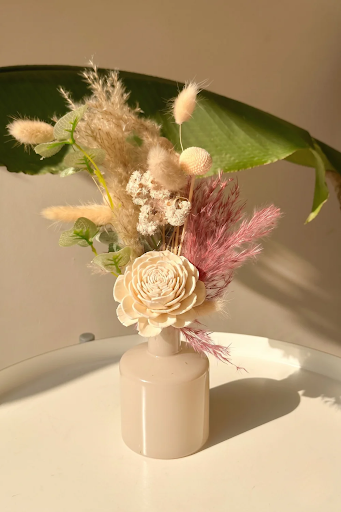
How to Mix Pampas Grass with Other Dried Flowers for a Fuller, Designer-Style Arrangement

One thing I've noticed after putting together hundreds of dried flower arrangements is that people usually buy pampas grass first and think about everything else later. I mean, I get it. Pampas is soft, tall and catches your eye the moment you walk into a room. But once it's home and sitting in a vase, it can sometimes feel...unfinished.
No, that doesn’t mean you made the wrong choice. Pampas fills height perfectly with its airy shape but sometimes, you need a bit of jazz for it to occupy good space. In Coastal Habitat’s dried flower arrangements, we get around this by mixing different flower textures and sizes together. Plus, if you like decorating your home seasonally, this pattern is very useful since you can swap one flower for another as seasons change while keeping pampas as the centerpiece.
Why Pampas Grass Alone Can Look Sparse In A Vase
Pampas grass brings height and softness. It naturally draws your eye upward but it leaves plenty of breathing room between each plume. In a wider vase, the gaps between the stems become much more obvious. Plus, the pampas plumes fan out toward the top while staying slim near the base. When wind blows, you’ll see a lot of movement on top but nothing on the bottom. Professional arrangements usually mix different dried flowers for exactly this reason. So rest assured, you don't need another twenty stems to make your arrangement feel complete. You just need the right ones.
Best Dried Flowers to Pair With Pampas Grass
Baby's Breath For Softness

I like using baby’s breath around the outside of an arrangement since it fills in the pockets that pampas grass leaves behind. Plus, it softens the edges without taking attention away from the taller plumes.
Hydrangea For Volume And Color

If your arrangement feels a bit flat, use hydrangeas. With large rounded flower heads, they instantly add volume to a vase that looks empty. They also come in colors like blush, red and yellow that pair beautifully with natural pampas because they don't overpower it.
Shola Flowers For Structured Accents

Shola flowers have always been one of my favorites. They're handcrafted from the pith of the Aeschynomene aspera plant, a traditional Indian handicraft material that's both lightweight and biodegradable. I usually place one or two near the center of the arrangement instead of scattering them throughout since they have a softer texture. They naturally become a focal point in any arrangement they’re placed in.
Bunny Tails For Texture Contrast
The rounded heads of bunny tail break up longer plumes while repeating the same soft texture pampas is known for. I love using them in medium-sized arrangements where larger flowers might make the vase feel heavy. Sometimes I'll even group three or four bunny tails together instead of spreading them around. They look more natural that way, almost as though they grew there.
Color Pairing Ideas: Neutral, Pastel And Bold Combinations
-
For home decor, natural neutral tones are your safest bet. Cream pampas, ivory shola flowers, beige bunny tails and white baby’s breath is something you must explore for a year-round style.

-
Soft blush hydrangeas and pastel bunny tails add interest without being overwhelming, making it perfect for bedrooms and study rooms which suit that relaxing vibe best.

-
If you want your dried flowers to be bold and eye-catching, remember not to overdo it. Choose one accent color for the pampas (black in the picture below) and keep the rest natural. And because pampas is versatile, it easily adapts when you eventually redecorate.

How Much of Each to Use (Simple Ratio Guide)
How many stems do you actually need? Well, there's no perfect number because every vase is different but I usually work with a simple rule that keeps arrangements looking full without feeling stuffed. Of course, you must choose your vase carefully first. Know that fewer stems look better for a slim-neck vase while more stems suit wider necks.
Let pampas grass make up roughly half of the arrangement. The next largest share can come from flowers with more volume, like hydrangeas or shola flowers. The remaining space belongs to fillers such as baby's breath or bunny tails.
Let’s say you’re arranging for a vase with ten stems. Then, five can be pampas, three can be larger flowers (shola or hydrangeas) and the last two can fill any obvious gaps to avoid the vase looking empty.
This is not a hard and fast rule, of course. If your hydrangeas are particularly large, you might only need one or two. If your vase is smaller, you might not even need so many stems. Always experiment with removing a few stems once your arrangement’s “done” to see how you like it.
Arranging Step-by-Step - Layering Without Overcrowding the Vase
-
As a starting point, put in some pampas grass to give it rough shape and height. I’d suggest placing the plumes towards the back for wall-facing arrangements.
-
To add volume to the arrangement, add a few stems of hydrangeas, shola flowers or both. Make sure to rotate the vase frequently to ensure balance from all angles.
-
I love adding baby’s breath and bunny tails to fill any gaps in the arrangement. Don’t add too many and overcrowd through. Our aim is to let the natural beauty of the flowers shine.
-
Once done, step away for five minutes. Returning with fresh eyes helps you make better adjustments and you might even want to remove a stem or two. Plus, intentional negative space in an arrangement can often add to its beauty than remove from it.
Mistakes to Avoid When Mixing Textures and Heights

-
Don’t add too many flowers - I've seen arrangements with pampas grass, cotton stems, hydrangeas, bunny tails, preserved eucalyptus and dried palms all competing for attention. Yes, they’re all lovely but together, it’s just way too much.
-
Every stem shouldn’t be the same height - If you’ve seen flowers in real life, you know that they all don’t share the same stem height. Similarly, the best arrangements provide a little variation for your eyes to travel.
-
Pick the right vase - A narrow-neck vase naturally gathers stems together so you can get away with using fewer flowers. On the other hand, wide vases usually need more volume, otherwise the arrangement spreads out and starts looking sparse. Psst, if you want to avoid the headache of arranging, check out our vase and bunches collection.
Conclusion
One of the reasons I enjoy working with dried flowers is that no arrangement ever has to stay the same. Unlike fresh flowers, you're not racing against time before everything wilts. You can move stems around next week, add another flower a month later or reuse the same pampas grass in a completely different vase for seasonal arrangements.
At Coastal Habitat, we sell our dried flowers individually with exactly this in mind. Our pampas grass, preserved flowers, bunny tails and shola flowers are selected so you can mix them together as per your liking and available vases. In case you don’t wish to arrange it by yourself or are looking for some inspiration, do check out Coastal Habitat’s vase and bunches collection.
